
Afyangu · Case study
Bringing national health records and insurance into one citizen app.
A citizen-facing digital health platform connecting personal medical records, national insurance coverage, appointments and prescriptions in one government-run service.
Visit live website ↗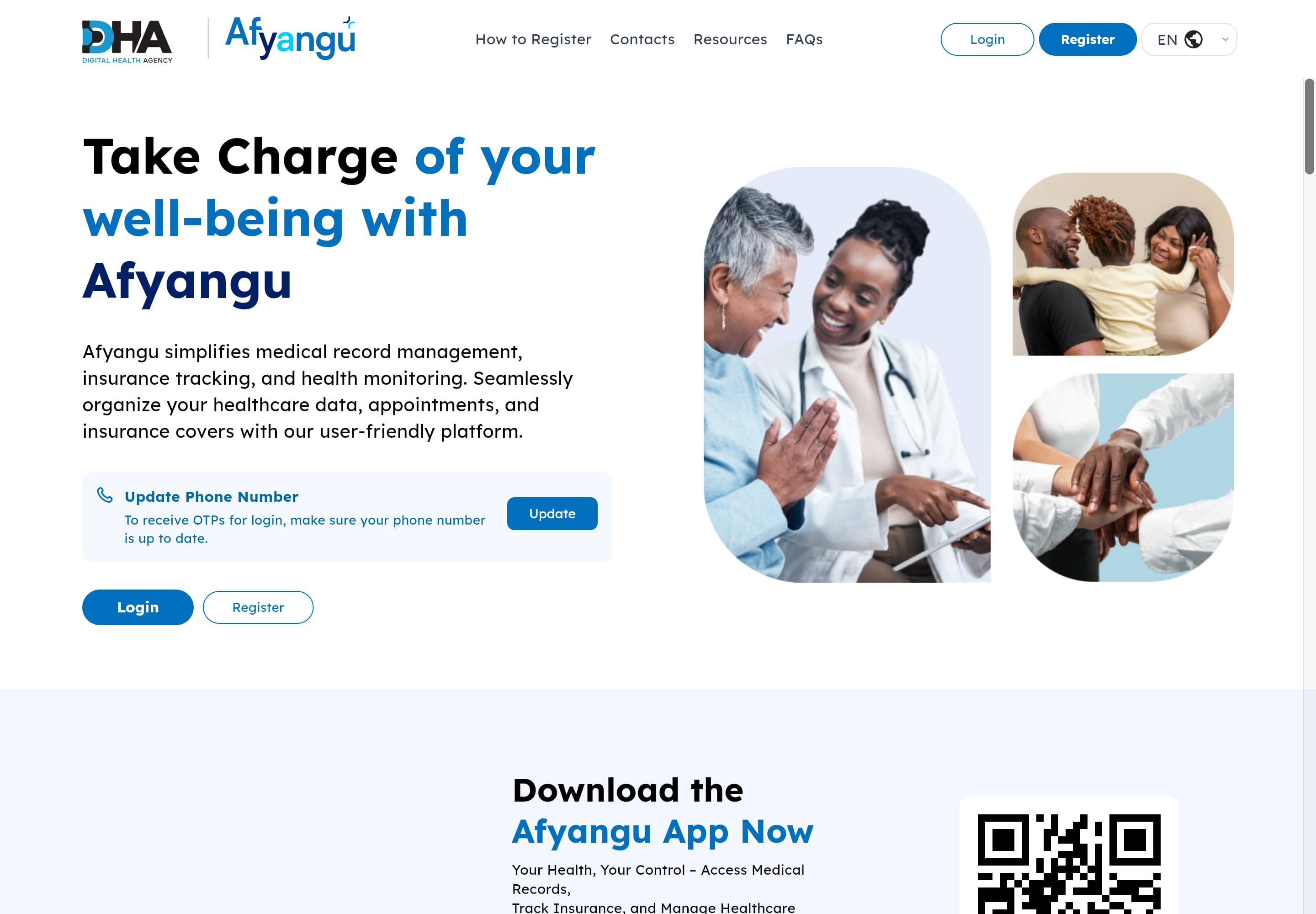
The context
Project overview
Afyangu is a Kenyan Digital Health Agency platform for individual health record management, run under the Ministry of Health. It gives citizens a single place to see their Social Health Authority (SHA) insurance coverage, their visit history across hospitals, upcoming appointments and current prescriptions. Our design and development work built the public-facing web application that carries this into one account, alongside a companion mobile app.
Project purpose
Help a citizen register for an account, connect it to their national insurance coverage, and use it to track medical visits, appointments and prescriptions without needing to contact a facility directly for that information.
Business needs addressed
- Explain a multi-part health record and insurance service in language a first-time visitor without medical or technical background can follow.
- Connect a citizen's registration to their SHA insurance coverage and identity verification status.
- Support ongoing use for appointment scheduling, prescription history and consent over who can see a record.
The design challenge
What the experience needed to solve.
A national health record service touches sensitive personal and medical data, a government insurance scheme, and citizens with very different levels of digital confidence. The interface has to explain what the service actually does, carry a citizen through identity verification and registration, and then keep working as a day-to-day tool for appointments and records — without the sensitivity of the data making the everyday screens feel unapproachable.
Our solution
Design and development, together.
We led with a plain-language explanation of what the platform manages — records, insurance, appointments, prescriptions — before asking a visitor to register. A dedicated step-by-step registration guide sits alongside the sign-up flow itself, since identity and insurance verification introduce steps a typical consumer sign-up doesn't need. Once inside, the same visual language — facility cards, status tags such as pending, confirmed or active — is reused across records, appointments and insurance, so the account feels like one product rather than several stitched-together services.
Inside the website
Features with a purpose.
Registration and self-onboarding guide
A dedicated 'How to Register' walkthrough pairs annotated screenshots with the live sign-up flow to guide a citizen through identity and account verification.
SHA insurance coverage tracking
A coverage card shows total insurance value and active status, connecting a citizen's Social Health Authority cover to their account.
Medical visit and facility history
A timeline view lists visits by facility, distinguishing hub and spoke facilities so a citizen can see where care was given across a referral network.
Appointments, prescriptions and consent
Appointment cards carry pending, confirmed and complete states, prescription records list drugs by facility and date, and a consent control lets a citizen manage who can access their record.
User experience
A journey built around the audience.
The interface stays deliberately plain: short headings, one feature at a time, and status language — pending, confirmed, active — that carries the same meaning wherever it appears. Photography of real clinical settings anchors an otherwise data-heavy product in the everyday experience of visiting a doctor.
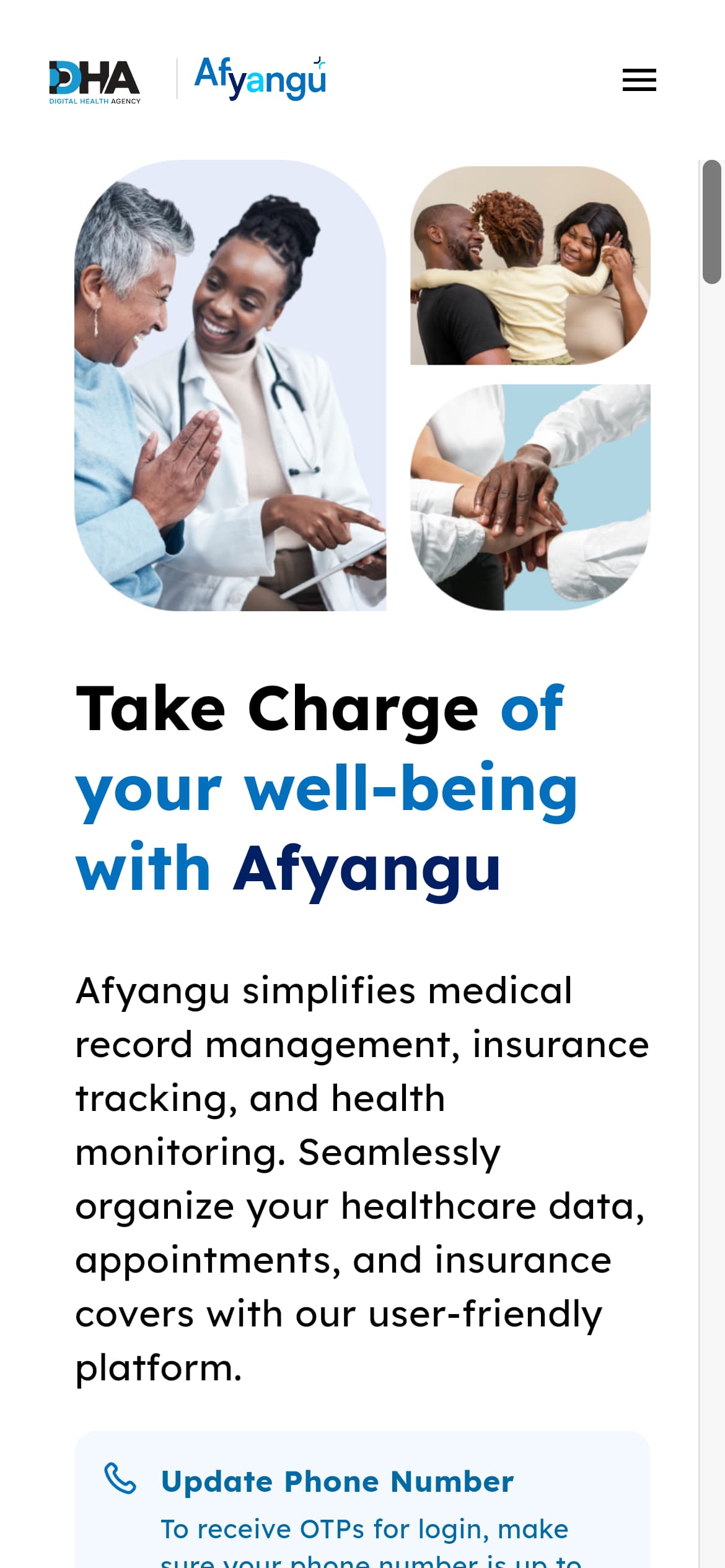
Across screen sizes
A considered mobile experience.
The layout is built mobile-first and reflows to a single column at phone width, which matters for a service most citizens are expected to reach primarily through the companion Android and iOS apps advertised directly on the homepage.
The delivered result
Project outcome
Afyangu gives citizens one account for medical records, SHA insurance coverage, appointments and prescriptions, backed by a registration flow built for identity and insurance verification rather than a typical consumer sign-up. The Ministry of Health and Digital Health Agency branding carries through every screen, keeping the service recognisable as an official government platform.
Explore the project
Project visuals show the client’s website and published imagery. Product claims and customer feedback on those websites belong to the respective businesses.